
AstroTurf Pitch Problems: Signs the Site Was Never Properly Studied
November 9, 2026
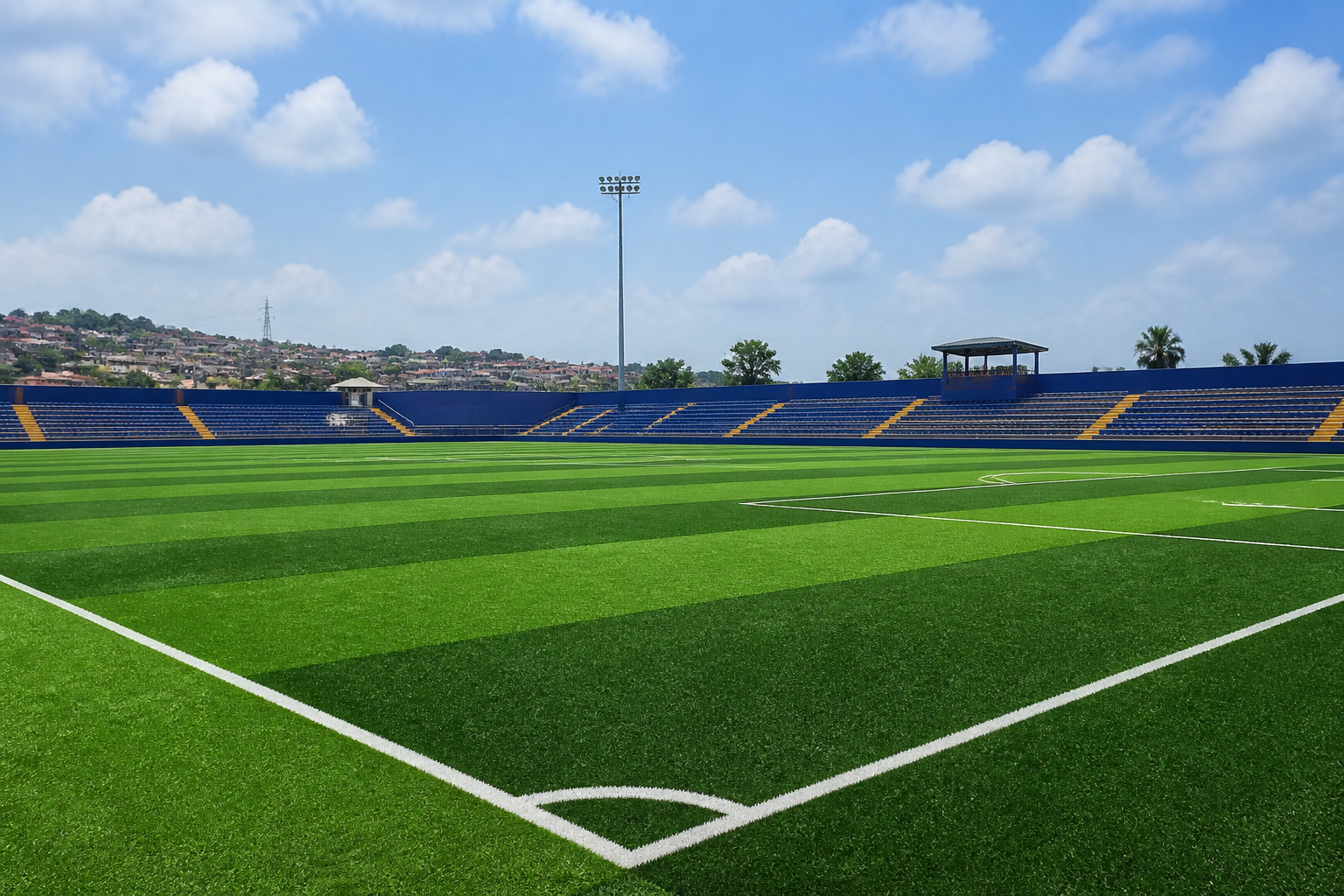
If you manage a community pitch, school sports facility, or recreational ground in Accra, you may have noticed something is off. The surface looks fine at first glance, but after rain it floods in one corner. The turf is lifting near the goalposts. The ball bounces differently depending on where you are on the pitch. These are classic astroturf pitch problems, and most of them trace back to decisions made before a single roll of turf was ever laid.
A proper site study happens before construction. It looks at soil composition, drainage patterns, the slope of the land, and how water moves across and beneath the surface during Accra's rainy seasons. When that study is skipped, or done poorly, the problems show up later, and they are expensive to fix.
Here is what to look for.
Standing Water After Rain
Accra's major rains are not gentle. Between April and July, and again around October, rainfall can be heavy and fast. A well-built astroturf pitch is designed to drain that water quickly, directing it away from the playing surface through a properly graded sub-base and drainage system.
If you walk onto your pitch after a significant downpour and find water pooling, especially in the same spots every time, the drainage layer beneath the turf is not doing its job. This usually happens because the sub-base was laid without understanding how water naturally moves across that specific piece of land. The grading is wrong, the drainage channels are in the wrong place, or the compacted base layer has no slope to guide water away.
Puddles are not just an inconvenience. Standing water softens the base over time, which leads to further problems with the surface above it.
Uneven Wear Patterns Across the Surface
All pitches wear over time. That is expected. But the wear should be relatively consistent across the areas that see the most play: the centre circle, the penalty spots, the areas in front of goal.
If you see patches of the turf that are heavily worn or flattened in places that do not match typical play patterns, the sub-base beneath those areas is likely uneven. This is a sign that the ground was not properly levelled and compacted before the turf was installed. Soft spots in the base compress under repeated use faster than firmer areas, creating dips. The turf above those dips takes more direct impact and wears faster.
This is also a safety issue. An uneven surface increases the risk of ankle injuries, especially for young players who are moving quickly and changing direction.
Turf Lifting at Seams and Edges
Astroturf comes in rolls and is joined at seams. When a pitch is built correctly, those seams are bonded to a stable, flat surface and hold firmly for years. When the site preparation was poor, the seams start to lift.
Check the edges of the pitch first, along the perimeter and around any fixed structures like goalposts. Then look at the join lines running across the surface. If the turf is peeling, bubbling, or has visible ridges along those lines, the adhesive failed because the surface beneath it was not stable enough to hold the bond.
This can happen when the base layer was not properly cured before the turf was laid, or when moisture from poor drainage is working its way up from below. Either way, it points to a site that was not adequately assessed before work began.
Astroturf Pitch Problems Caused by Soil That Was Never Tested
Accra's soils vary significantly depending on where you are. The laterite soils common in many parts of the city behave very differently from sandy coastal soils or the clay-heavy ground found in low-lying areas. Each soil type has different load-bearing capacity, drainage behaviour, and sensitivity to moisture.
When a contractor skips soil testing, they are guessing at how to build the sub-base. They may use the same approach they used on a different site in a different part of the city, not accounting for what is actually underneath this pitch. The result is a base that may shift, settle unevenly, or drain poorly. All of which show up on the surface within a year or two of use.
Proper site study includes soil testing, not just a visual inspection of the ground.
Bounce and Ball Roll That Changes Across the Pitch
This one is harder to document but easy to notice during play. If the ball bounces noticeably higher in some areas than others, or rolls faster in one direction than another, the surface is not level and the infill, the rubber or sand material packed between the turf fibres, has settled unevenly.
Uneven infill settlement is often caused by the same underlying issue: a sub-base that was not properly prepared. When the base has dips or soft spots, the infill migrates toward those areas over time, leaving other parts of the surface with too little cushioning.
What a Proper Site Study Would Have Prevented
Every one of these problems is preventable. A proper site study identifies the drainage gradient before a shovel goes in the ground. It tests the soil so the sub-base specification matches what is actually there. It maps how water moves across the site during rain, not just how it looks on a dry day.
The cost of fixing a poorly built pitch is almost always higher than the cost of building it correctly the first time. Relaying turf, regrading a sub-base, or installing drainage after the fact requires undoing work that has already been paid for.
Get a Site Assessment Before You Commit
If you are evaluating a pitch for your school, community, or institution, or if you are already seeing these warning signs on an existing surface, Borbor Limited offers free site assessments. We will look at the ground, the drainage, and the existing structure and give you an honest picture of what is there and what it will take to fix it or build it right.
No upselling. No vague quotes. Just a clear explanation of what your specific site needs.
Contact Borbor Limited today to book your free site assessment.