Building & General Construction
Give Your Family a Building Built on Real Study, Not Guesswork, Whether You're Watching or Not
Most construction problems in Ghana start with what nobody studied, not what nobody built well. Borbor studies your soil, your site conditions, and your materials before a single wall goes up, whether it’s a family home, a commercial building, or a public facility.
The Real Failure Point
Why Buildings Actually Fail in Ghana
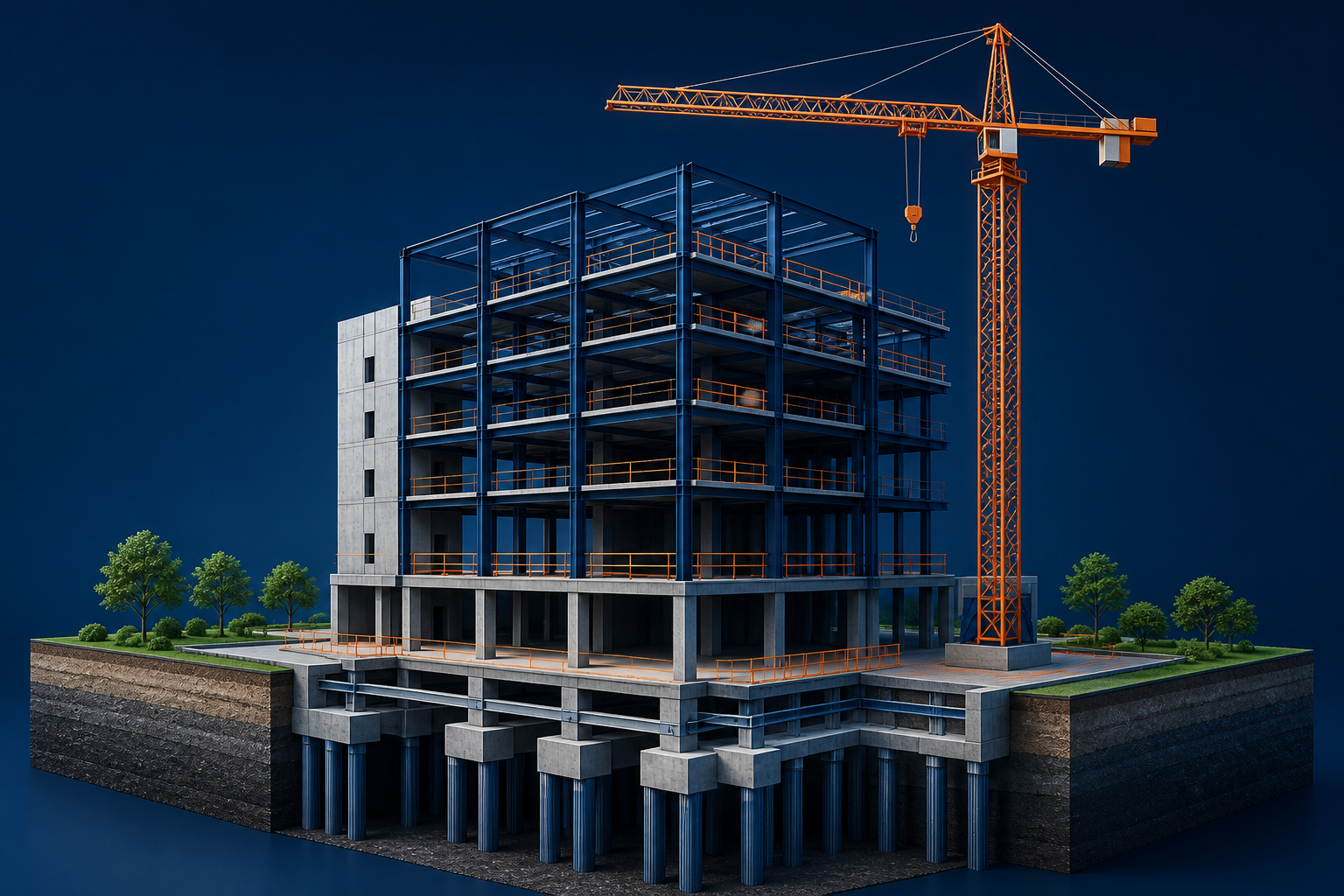
A wall does not crack because of bad paint. It cracks because nobody studied the ground and conditions underneath it before deciding how to build on it. A building settles unevenly because the foundation depth was guessed instead of calculated for that specific site. These are not rare accidents. They are the predictable result of skipping real study to save time on the schedule.
If you are building from abroad and cannot walk the site yourself, this risk is worse, not better. You are trusting photos and phone calls to represent conditions nobody actually studied.
What You Get
What Borbor Actually Builds
Public & Civic Buildings
Community hubs, school blocks, and sports administrative complexes, built to the same engineering standard as every pitch and road Borbor delivers.
Commercial & Industrial Builds
Warehouses, multi-unit housing, and security walls, scoped and engineered for the load and use they actually need to handle.
Residential Construction
Custom homes, including for Ghanaians building from abroad who need a team they can trust to test the ground properly when they cannot be on site themselves.
Building From Abroad? Here Is What Changes
You cannot inspect the soil yourself. You cannot drop by unannounced to check progress. That means the engineering step matters more, not less, and the documentation of it matters just as much as the finished photos. Every Borbor project includes real photo and video from the groundwork stage, not just the finished result, specifically because this audience needs to see the part that never gets photographed by contractors who skip it.
Labor Illusion, No Illusion
How the Build Actually Works
Deep Client Discovery & Goal Alignment
Every project starts with a real conversation about what you are actually building and why, not a sales pitch. What is this facility, road, or building actually for? Who uses it, and for how long? Those questions get answered before any design decision gets made, so your money goes toward what the project is actually meant to achieve.
Community & Stakeholder Research
Whatever gets built belongs to the people around it, not just to you. Borbor talks directly with the people who will actually use or live near the finished project, so it gets shaped by real usability, not guesswork about what a community or a household needs.
Environmental & Material Science Research
Ghana's climate varies drastically by region, coastal salt air, heavy inland rain, northern heat. Your site gets tested for its actual soil, drainage needs, and material demands, not a generic regional assumption. This is the step most competitors skip or rush.
Transparent Consultation & Advisory
The research comes back to you as an honest conversation, upsides and downsides of each option laid out side by side. You get pointed toward the smartest option for your budget, not the most expensive one on the list.
Turnkey Precision Execution
Once you approve the plan, one team handles everything, from ground clearing to handover. Because the first four steps already happened, this part moves fast. 2 to 3 months on the projects completed so far.
Common Questions
Common Questions
What does a construction company in Ghana actually handle?+
Site preparation, structural building, and finishing, though the quality of the result depends entirely on whether the ground was properly tested before construction started.
How much does it cost to build a house in Ghana?+
It depends on size, location, and site conditions. A free site assessment gives a real number specific to the project, not a generic estimate.
Can Borbor manage a build if I'm not in Ghana?+
Yes. Photo and video documentation at every stage, including groundwork, is standard practice specifically for clients who can't be on site.
Does Borbor only build large commercial projects?+
No. Residential homes, community buildings, and commercial builds are all active work, scoped individually by site assessment.
What is the actual difference between Borbor and a general contractor?+
Soil and material testing before construction starts, on every project, not as an optional add-on.
Don't Find Out About a Bad Foundation After the Walls Are Up
A site assessment costs nothing and tells you what's actually in the ground before you commit to building on it.
Request a Free Site AssessmentFree site visit. No obligation to build.