Sports Infrastructure & AstroTurf
The Dream Shouldn't End Because of a Bad Pitch. Borbor Studies the Site, the Weather, and the Materials First
Most pitch failures start underground, not on top. Before Borbor touches your site, soil gets tested, weather patterns get studied, and materials get chosen for your ground, not a generic spec. Request a site assessment and see what real research looks like.
The Real Failure Point
What Actually Makes a Pitch Fail
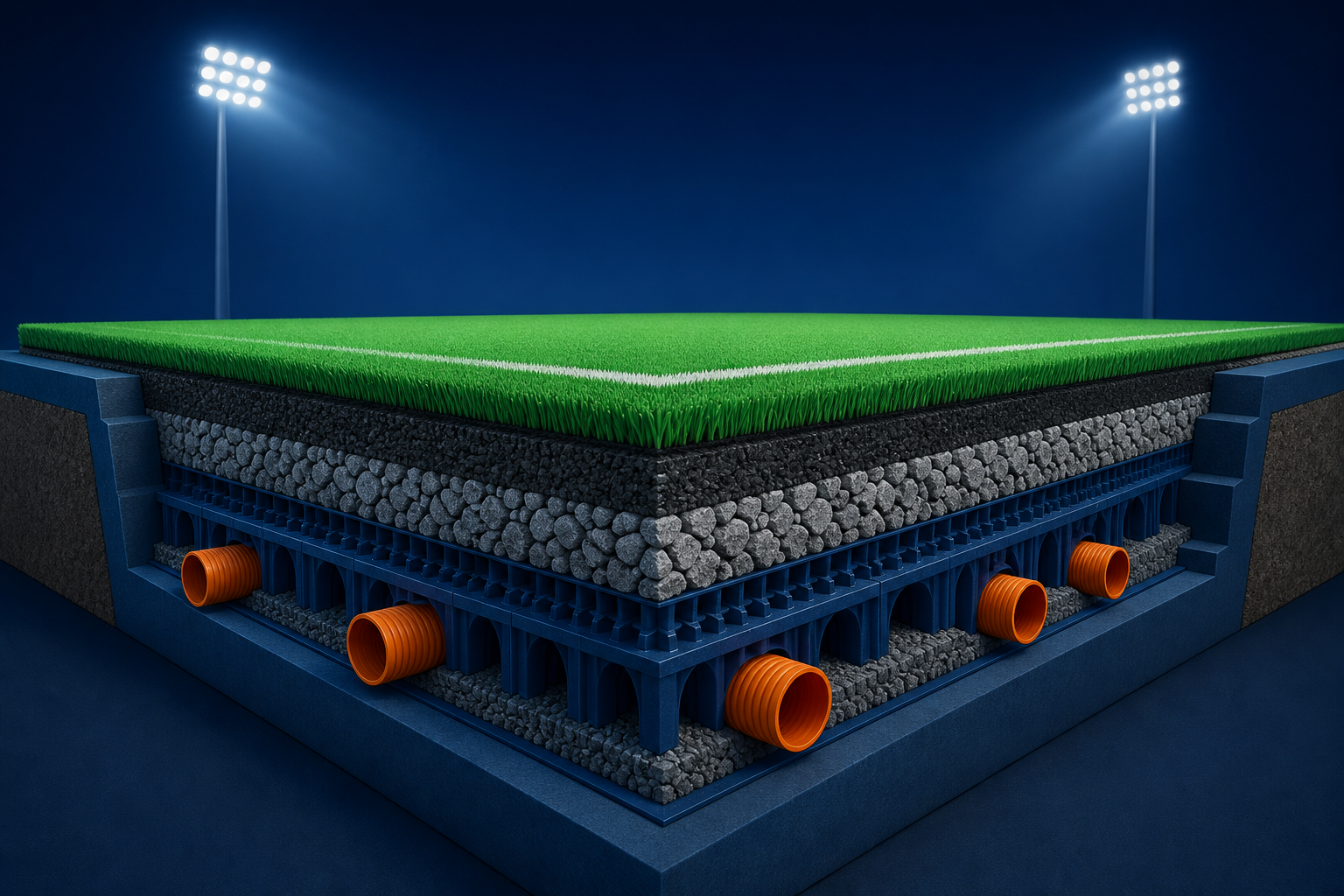
A pitch does not fail because of the turf on top. It fails because of what nobody studied underneath it, and around it, before construction started.
Skip the soil study, and the drainage gets designed for a generic assumption instead of the actual ground. Skip the weather study, and materials wear out faster than they should for that specific site's heat, humidity, and rainfall. Skip the real research entirely, and go straight from a handshake to a delivery truck full of turf. Every one of these is a shortcut that shows up later, after the contractor is gone and the invoice is paid.
This is not about one missing feature like drainage. Reputable contractors know to think about drainage. It is about whether anyone actually studied this specific site, in full, before building on it. Most of the pitches that fail were never studied at all.
What You Get
Why Borbor Builds Differently
- Get your soil, weather exposure, and materials all studied before construction starts, so the pitch is built for your actual site, not a generic assumption.
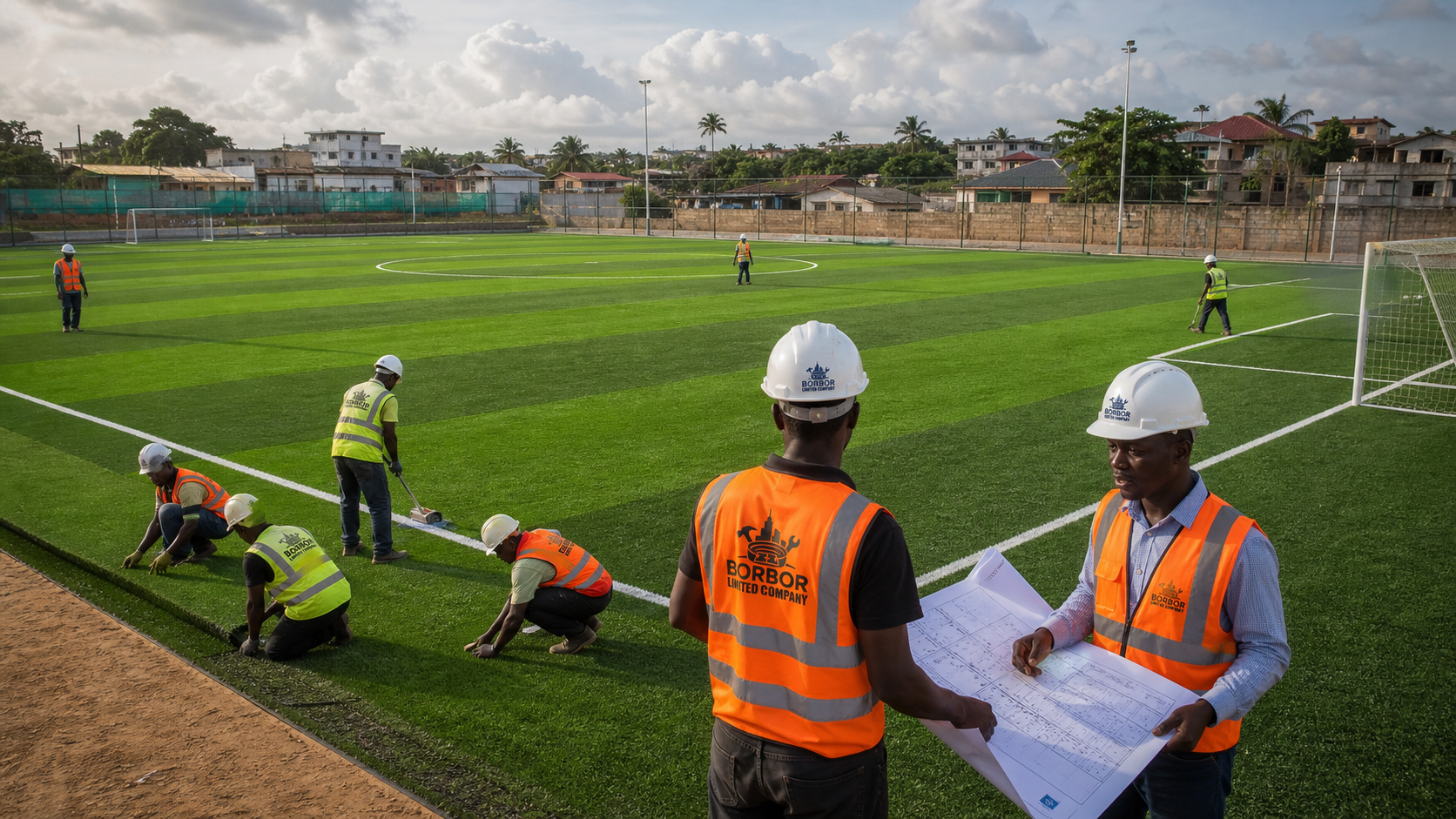
- Play on FIFA-standard turf built with monofilament fiber and rubber infill, so every match feels right and safer.
- Deal with one team for the entire build, from earthworks to floodlights, so nothing falls through the cracks between contractors.
- Fill stands built to your community’s real size, from 100 to 200-plus seats, not a generic template.
- Get changing rooms, washrooms, and dugouts built in, so the facility hosts real competition, not just practice.
- Keep the pitch secure and playable after dark with perimeter fencing and floodlighting in the same project.
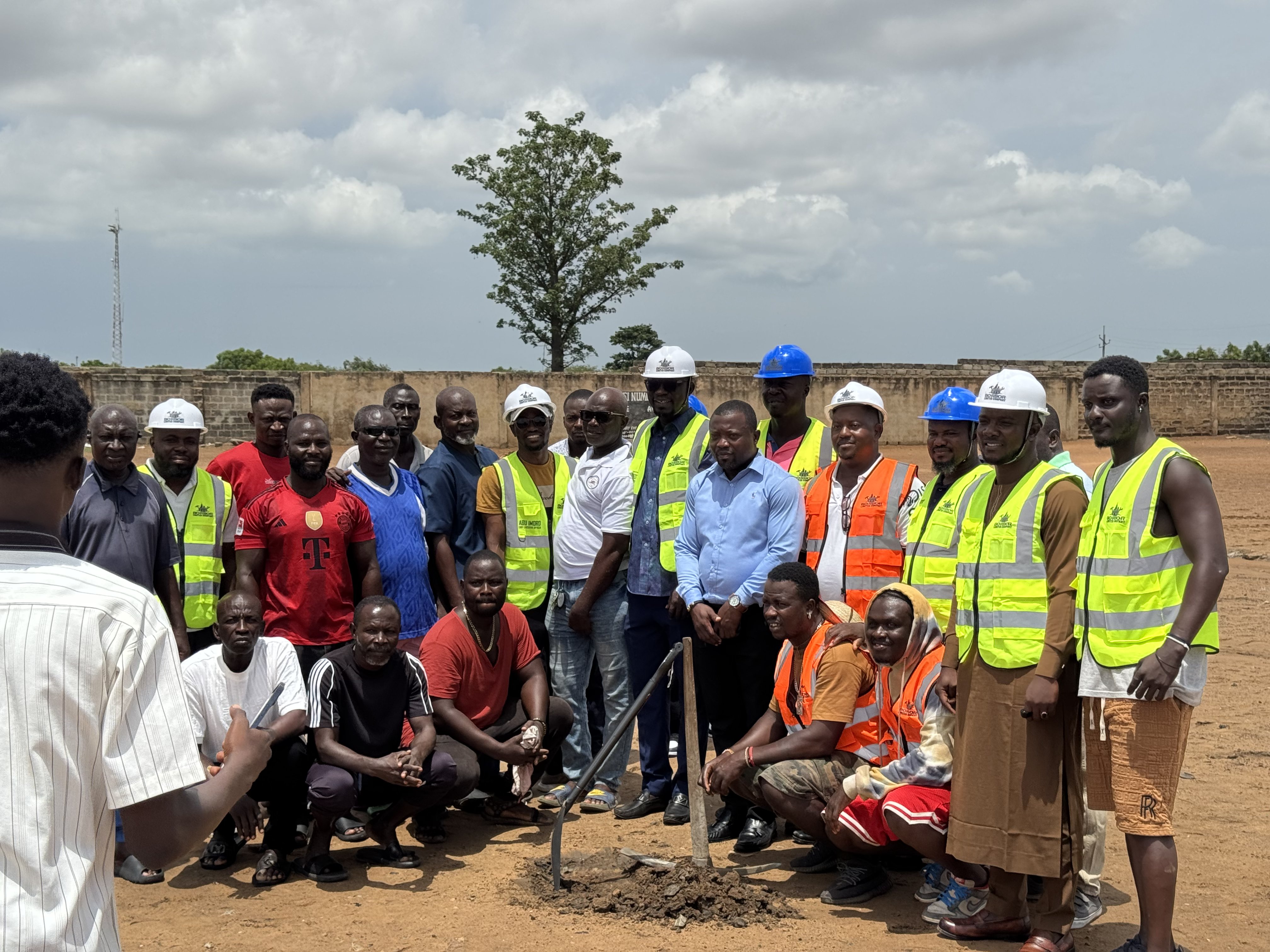
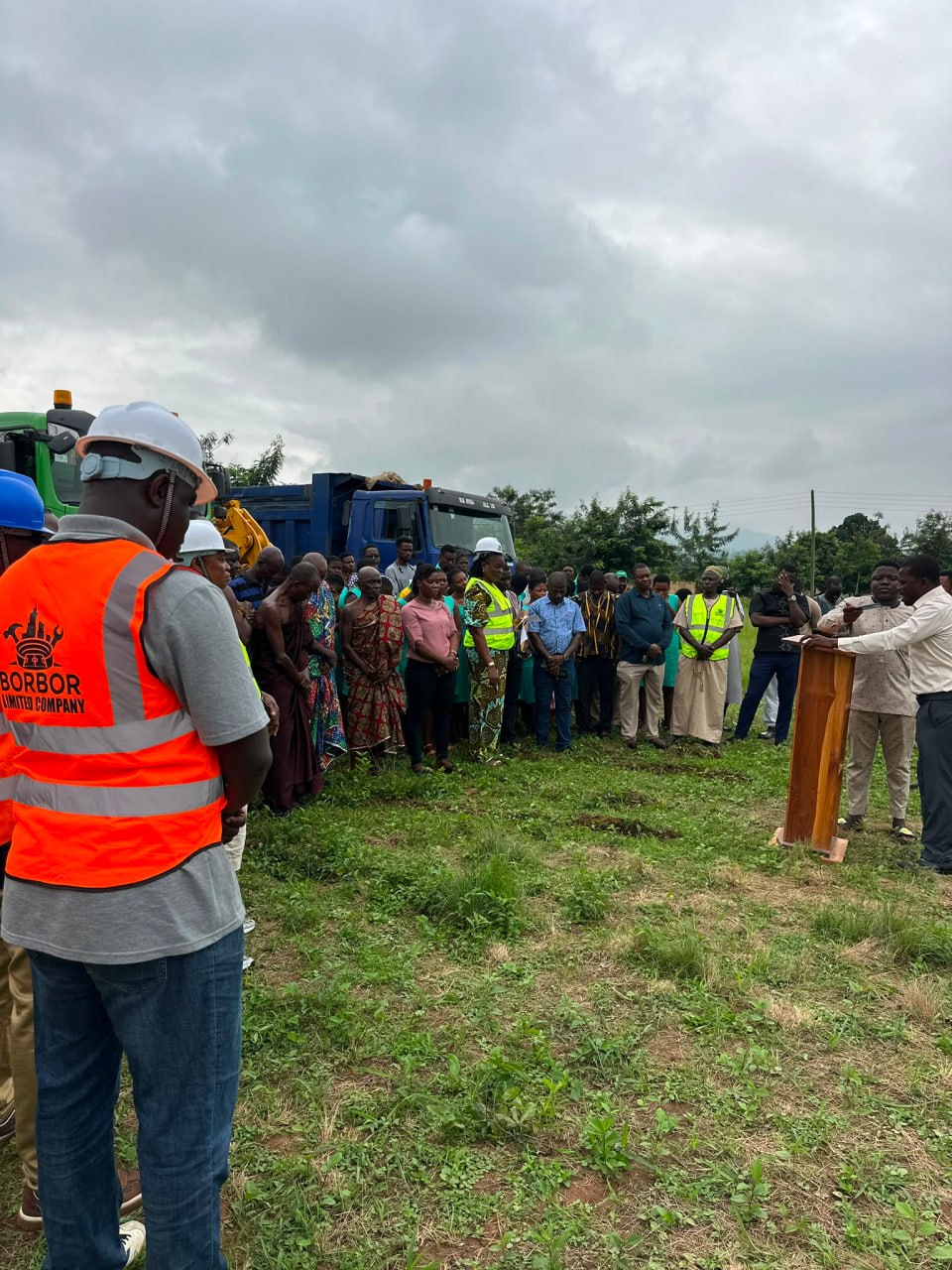
- Watch your own community protect this investment, because they helped plan it before the first excavator arrived.
- Add a Titantrax running track to the same site, so your athletics program gets engineered the same way as the pitch.
New: Athletic Track Construction (Titantrax)
Borbor now builds Titantrax athletic running tracks alongside AstroTurf pitches. Same process. Soil tested first, drainage engineered second, the track surface last. If a facility needs a track as well as a pitch, it gets planned and built as one project, not two separate ones.
Labor Illusion, No Illusion
How the Build Actually Works
Deep Client Discovery & Goal Alignment
Every project starts with a real conversation about what you are actually building and why, not a sales pitch. What is this facility, road, or building actually for? Who uses it, and for how long? Those questions get answered before any design decision gets made, so your money goes toward what the project is actually meant to achieve.
Community & Stakeholder Research
Whatever gets built belongs to the people around it, not just to you. Borbor talks directly with the people who will actually use or live near the finished project, so it gets shaped by real usability, not guesswork about what a community or a household needs.
Environmental & Material Science Research
Ghana's climate varies drastically by region, coastal salt air, heavy inland rain, northern heat. Your site gets tested for its actual soil, drainage needs, and material demands, not a generic regional assumption. This is the step most competitors skip or rush.
Transparent Consultation & Advisory
The research comes back to you as an honest conversation, upsides and downsides of each option laid out side by side. You get pointed toward the smartest option for your budget, not the most expensive one on the list.
Turnkey Precision Execution
Once you approve the plan, one team handles everything, from ground clearing to handover. Because the first four steps already happened, this part moves fast. 2 to 3 months on the projects completed so far.
Common Questions
Common Questions
How much does an AstroTurf pitch cost in Ghana?+
It depends on size, site conditions, and what is included. A free site assessment gives a real number, not a generic estimate.
How long does a build actually take?+
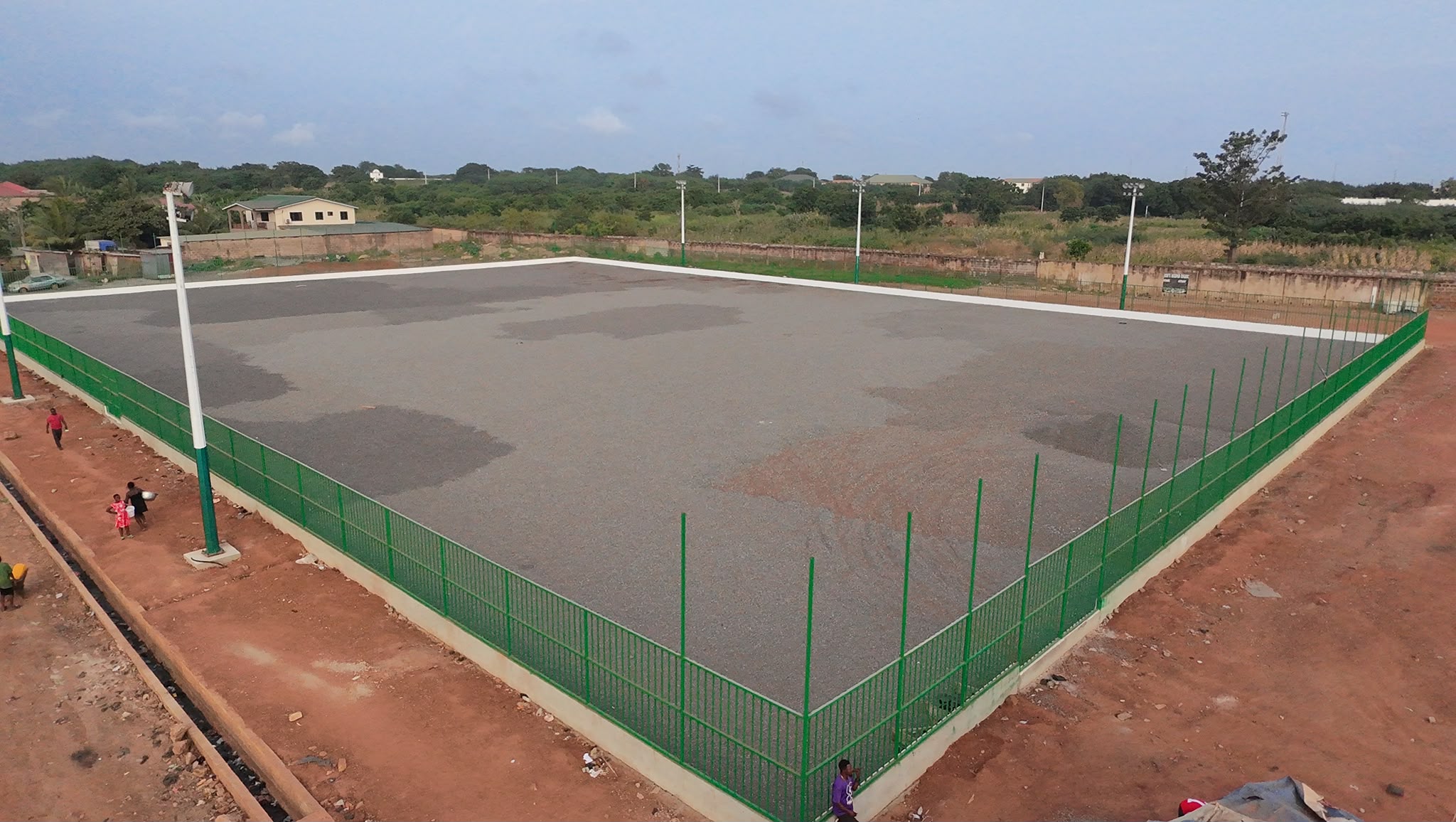
The three projects completed or underway so far have run 2 to 3 months, from earthworks to a finished pitch.
Why does site research matter this much for a pitch?+
Because most pitch failures trace back to something nobody studied, not something nobody built well. Soil, weather exposure, and material choice all get researched before construction, not assumed.
Is this only for large facilities?+
No. Borbor has built pitches from 90m by 50m up to 96m by 60m, with and without spectator stands.
Can Borbor build a running track too?+
Yes. Titantrax athletic track construction is now part of what Borbor builds, using the same soil-first, drainage-first process as every pitch.
Give This Dream the Ground It Deserves
Every pitch Borbor has built started the same way, studying the site before touching it. That is the difference between a pitch that fails quietly in two years and one a community plays on, and is proud of, for decades.
Request a Free Site AssessmentFree site visit. No obligation to build.