
Civil & Road Construction
Approve a Project That's Still Working in Ten Years, Not One You Have to Explain in Two
A road that cracks or a drain that backs up isn't bad luck. It's a design that was never studied for the site it's actually on. Borbor Limited Company studies the ground, the weather, and the materials before building, so the project is still working long after the ribbon cutting is forgotten.
The Real Failure Point
Why Roads and Drains Fail Early
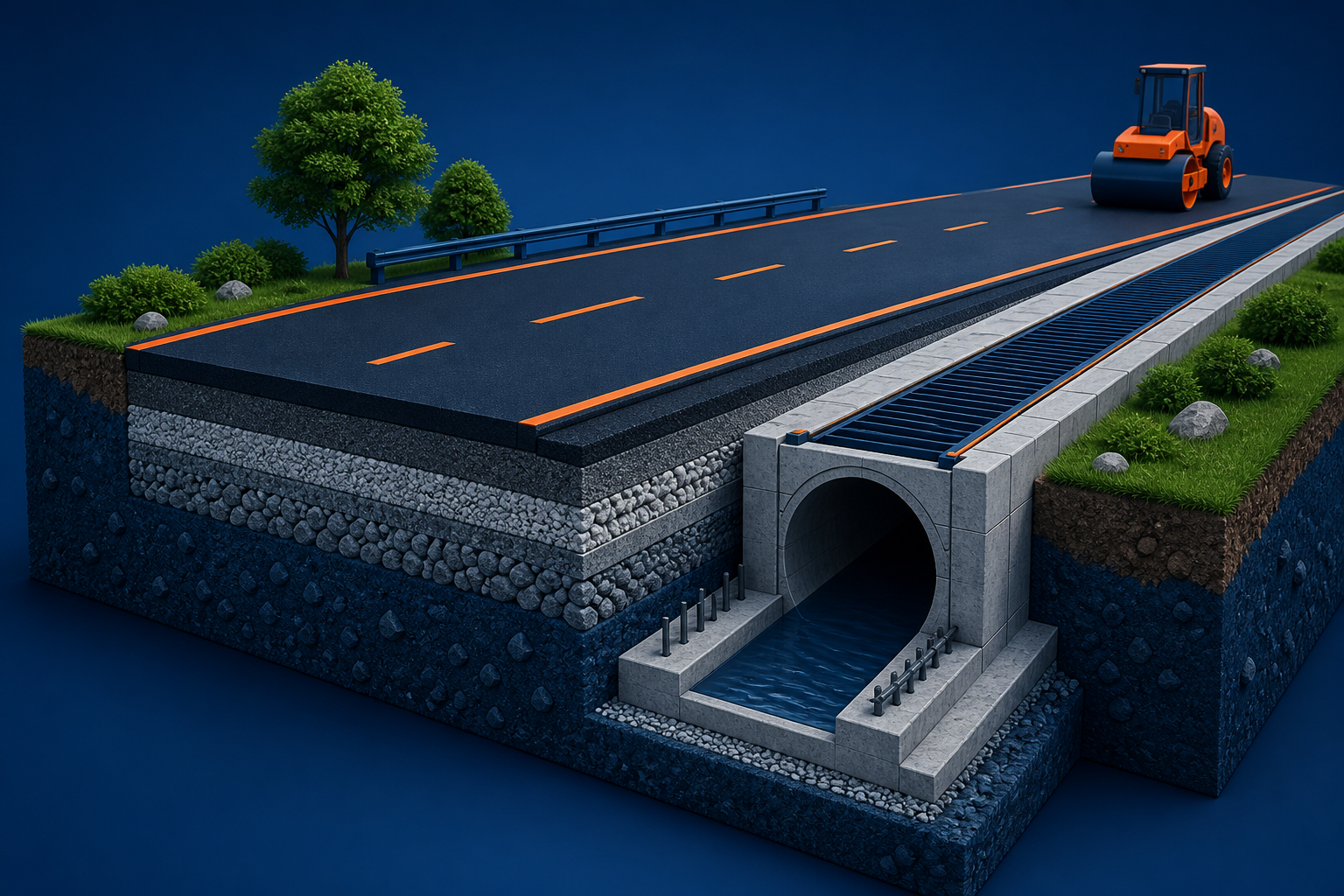
A road that cracks within two years was not built with the wrong asphalt. It was built on a sub-base that was never properly studied and stabilized for the soil and traffic load it actually carries. A drainage system that backs up in the first serious rain was not designed around this specific site’s real rainfall and terrain. Both failures are visible, public, and expensive to fix after the fact, and both are avoidable with real study before construction, not after a complaint comes in.
For a municipal planner or a developer, a failed public infrastructure project is not just a cost. It is a decision that gets scrutinized after the fact. Getting the study right the first time is the only real protection against that.
What You Get
What Borbor Delivers
- Get roads built with proper sub-base stabilization, so cracking and rutting don't show up within the first two years.
- Choose asphalt paving or interlocking paving blocks based on the actual traffic load, not a default assumption.
- Get stormwater drainage designed with reinforced concrete u-drains, culverts, and retention basins sized for real local rainfall.
- Clear and prepare large sites for municipal, commercial, or private development without guessing at excavation depth.
- Deal with one team across earthworks, drainage, and paving, so responsibility never gets split between contractors.
Institutional Buyers, What You’ll Want to Know
Company registration, licensing, and capacity documentation are available on request during the consultation. If a specific tender or RFP requires documentation ahead of a formal submission, request it directly rather than assuming what's publicly listed covers it.
Labor Illusion, No Illusion
How the Build Actually Works
Deep Client Discovery & Goal Alignment
Every project starts with a real conversation about what you are actually building and why, not a sales pitch. What is this facility, road, or building actually for? Who uses it, and for how long? Those questions get answered before any design decision gets made, so your money goes toward what the project is actually meant to achieve.
Community & Stakeholder Research
Whatever gets built belongs to the people around it, not just to you. Borbor talks directly with the people who will actually use or live near the finished project, so it gets shaped by real usability, not guesswork about what a community or a household needs.
Environmental & Material Science Research
Ghana's climate varies drastically by region, coastal salt air, heavy inland rain, northern heat. Your site gets tested for its actual soil, drainage needs, and material demands, not a generic regional assumption. This is the step most competitors skip or rush.
Transparent Consultation & Advisory
The research comes back to you as an honest conversation, upsides and downsides of each option laid out side by side. You get pointed toward the smartest option for your budget, not the most expensive one on the list.
Turnkey Precision Execution
Once you approve the plan, one team handles everything, from ground clearing to handover. Because the first four steps already happened, this part moves fast. 2 to 3 months on the projects completed so far.
Common Questions
Common Questions
Does Borbor handle both municipal and private road projects?+
Yes. Municipal, commercial, and private clients are all active project types, scoped individually.
How is drainage capacity actually determined?+
By testing the specific site's soil and modeling its real rainfall exposure, not applying a fixed regional standard.
Can Borbor provide documentation for a tender submission?+
Registration and capacity documentation are available on request; contact directly ahead of a submission deadline.
What's the typical timeline for a road or drainage project?+
Timeline depends on scope and site conditions and gets confirmed after a site assessment, not quoted as a fixed number in advance.
Get the Engineering Right Before the First Complaint Comes In
A site assessment gives you a real read on what a road or drainage project actually needs before it's built, not after it fails.
Request a Free Site AssessmentFree site visit. No obligation to build.