
Building a House in Ghana From Abroad: What Actually Changes
August 11, 2026
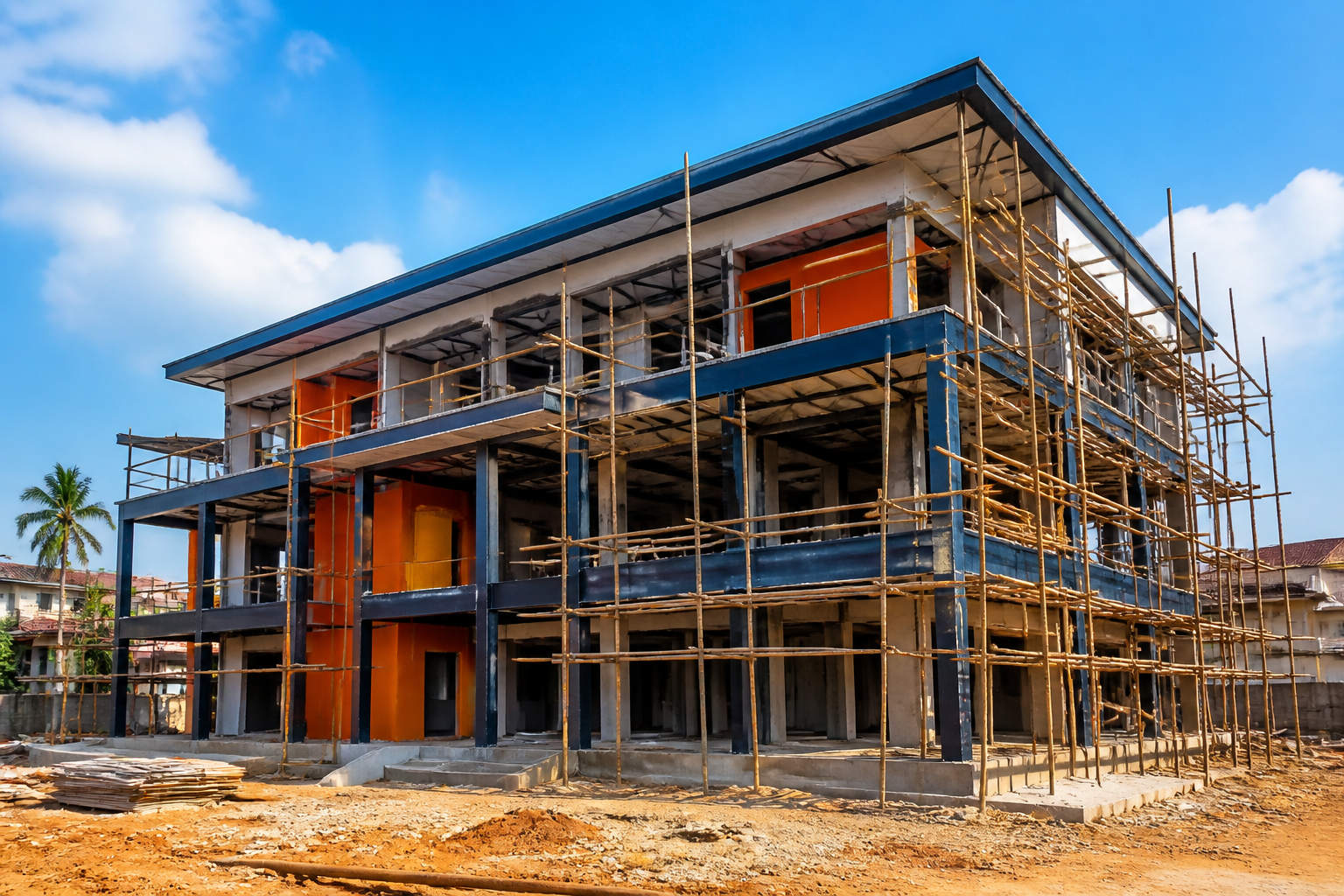
Building a House in Ghana From Abroad: What Actually Changes
Every week, Ghanaians in the diaspora wire money home to build. Some finish with a house they're proud of. Others finish — or don't finish — with regret. The difference is rarely about money. It's about what you can see, verify, and trust when you're thousands of kilometres away. Building a house in Ghana from abroad introduces one specific risk that local builds don't have: you cannot be on site. That changes everything about how you should choose a contractor and what they owe you in documentation.
The Problem Isn't Distance. It's What You Can't Inspect.
When you build locally, you drive past the site. You notice the concrete looks thin. You ask why the rebar spacing looks different from the drawing. You catch problems early because you're physically present.
From abroad, you lose that. And in Accra, what you can't see matters a great deal.
Accra's soil is not uniform. Parts of Tema and Ashaiman sit on expansive clay that swells in the wet season and shrinks in the dry season. A foundation built without accounting for that will crack. Lowland areas around Weija and parts of Kasoa flood. Coastal zones near Labadi and Nungua have high salt content in the air and soil, which attacks reinforcement steel over time. A contractor who hasn't tested your specific plot before designing your foundation is guessing. From abroad, you won't know they guessed.
This is why documentation isn't a courtesy. It's your only set of eyes.
What Building a House in Ghana From Abroad Actually Requires
You need two things that are non-negotiable when you're not on the ground:
First, a contractor who documents without being asked. If you have to chase photos, something is wrong. A trustworthy contractor understands that your absence is your vulnerability, not your problem to solve alone.
Second, a documentation plan agreed before work starts. Not "we'll send updates": a specific schedule of what gets photographed, when, and why. Every major stage has things that get covered up and can never be inspected again once the next stage begins. Those are the moments that matter most.
What Good Photo and Video Documentation Should Actually Show
Here is what each stage should capture, and why it matters.
Soil and Site Preparation Before any digging: photos of the raw plot, including any waterlogging, slope, or vegetation that affects drainage. After excavation: photos of the exposed soil at foundation depth. You want to see the colour and texture. Dark, organic-looking soil at depth is a warning sign. If a soil test was done, you should receive the written report, not just a summary.
Foundation This is the stage most likely to be rushed and most impossible to fix later. You need photos of the rebar layout before concrete is poured, showing spacing, depth, and how the steel connects at corners. You need a photo or video of the concrete mix arriving or being prepared on site. And you need photos immediately after pouring, before the formwork is removed. Once the foundation is backfilled, it is gone from view permanently.
Block Work and Structural Columns As walls rise, photos should show the mortar joints (thin, consistent joints are a sign of care), the alignment of columns with the foundation plan, and the positioning of conduit for electrical and plumbing before walls are plastered. Conduit buried in the wrong place means hacking open walls later.
Lintel and Roof Frame Lintels over windows and doors carry real load. Photos should show the rebar inside the lintel before it's cast, not just the finished concrete. For the roof frame, you want to see the timber or steel before roofing sheets go on. Check for treatment against termites if timber is used, which is a genuine concern in Accra's humid conditions.
Roofing and Waterproofing Accra's rainy seasons are serious. The June–July peak and the October–November secondary season bring heavy, concentrated rainfall. Photos should show how the roof overlaps at ridges and valleys, how gutters are fixed, and whether any flat sections have adequate fall to drain. A flat roof with no fall holds water. Water finds every weakness.
Finishing At this stage, photos matter less for structural reasons and more for accountability, confirming the tiles, paint, and fittings you agreed on are what was actually installed. Keep a written record of every specification before work starts so there's no ambiguity.
What to Ask Before You Hire Anyone
When you're building a house in Ghana from abroad, the contractor conversation needs to happen before money moves. Ask specifically:
- Will you conduct a soil assessment before designing the foundation?
- What is your documentation schedule, and who sends it to me?
- Who is the site supervisor, and can I have direct contact with them?
- How do you handle a problem discovered mid-build: do you inform me before fixing it, or after?
The answers tell you more than any brochure.
A contractor who resists these questions is not the right contractor for an absentee build. A contractor who answers them plainly, including the trade-offs and the things that could go wrong, is one you can work with.
One More Thing: Don't Let the Money Structure Create the Wrong Incentives
How you release payments shapes how the work gets done. Tying payments to verified stage completions, not to dates or requests, means the contractor's incentive is to complete stages properly, not just quickly. Agree the milestones and the documentation required to unlock each payment before the first cedis moves.
Borbor Limited works with diaspora clients building in Accra. We conduct soil assessments before any design is finalised, document every structural stage, and communicate directly, not through a chain of intermediaries. If you're planning a build from abroad, start with a site assessment. It costs nothing to understand what your plot actually needs before you commit to anything else.