
Building From Abroad in Ghana: What Progress Documentation You Should Actually Demand
November 9, 2026
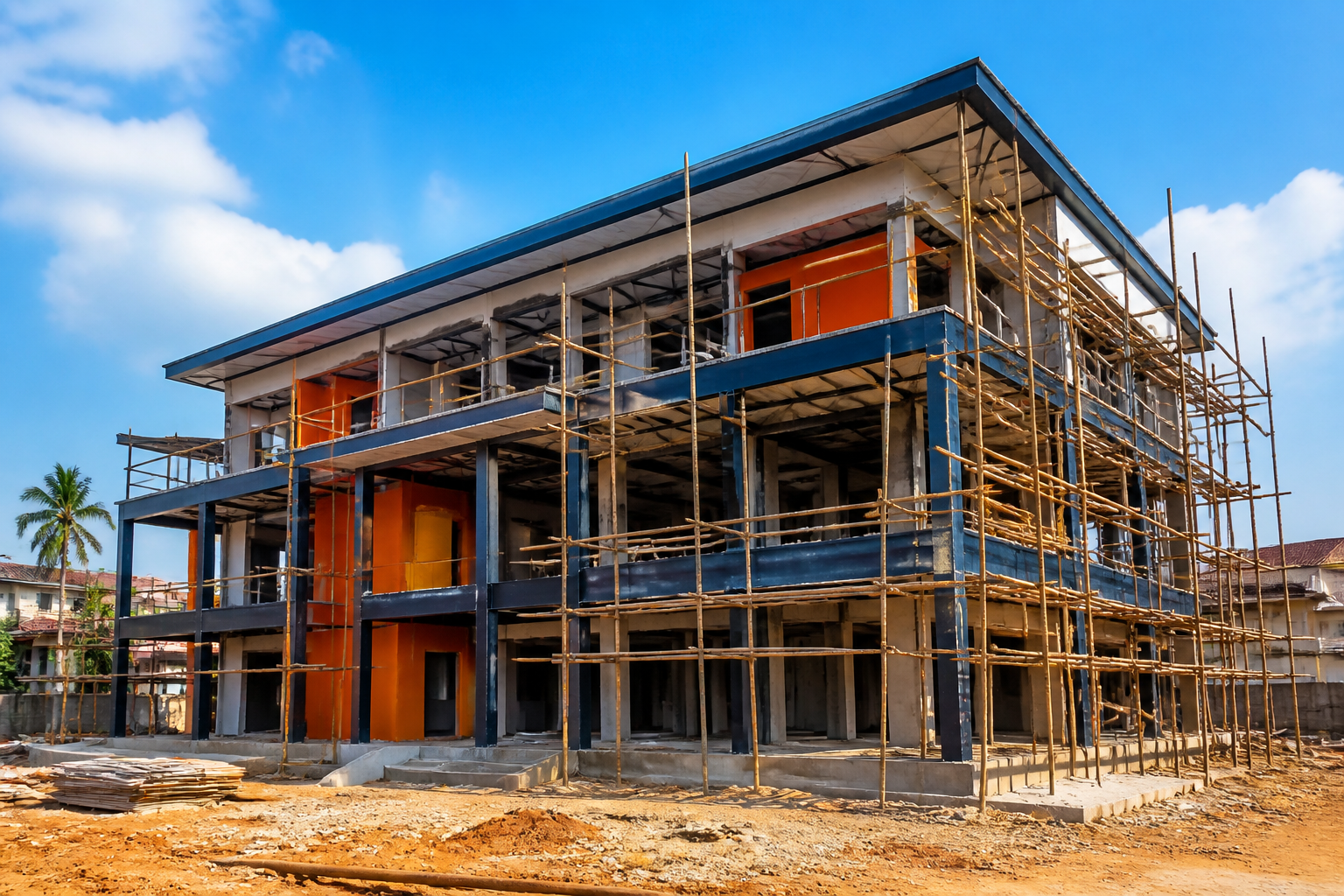
Building From Abroad in Ghana: What Progress Documentation You Should Actually Demand
Building from abroad in Ghana is entirely doable, but only if you know what to ask for and when. Most diaspora clients get photos. Some get phone calls. Very few get the specific documentation that would actually tell them whether their build is on track or heading for expensive problems later. This guide gives you a practical checklist: what to request at each stage, what questions to ask about groundwork specifically, and how to read what you're receiving.
Why Groundwork Is the Stage That Gets Skipped
When you are thousands of kilometres away, you see what gets photographed. Finished walls photograph well. A concrete slab photographs well. Excavation, soil preparation, and foundation reinforcement do not, and that is exactly why they are the stages most likely to be rushed or skimmed when there is no one watching.
In Accra, soil conditions vary significantly across neighbourhoods. Parts of Tema and Ashaiman sit on expansive clay that shifts with the wet season. Low-lying areas around Adenta and Dodowa can have high water table levels that affect how deep and wide a foundation needs to go. A contractor who skips proper soil assessment or lays reinforcement bars at the wrong spacing is creating a problem that will not show up for years, long after they have been paid.
This is not a reason to panic. It is a reason to know what to ask for before groundwork starts.
What to Request Before and During Groundwork
- Soil assessment report or notes. Ask your contractor what they found when they dug. What type of soil? Any signs of waterlogging or instability? A contractor who has actually looked will be able to tell you. One who hasn't will be vague.
- Photos of the excavation before any concrete is poured. You want to see the depth, the width, and the condition of the earth at the base. This is non-negotiable.
- Photos of reinforcement bars in place before casting. You should see the steel laid out in the trench or column mould, with visible spacing, before concrete covers it. Once it is covered, it cannot be inspected.
- A short video walking the perimeter of the foundation. A photo can hide a lot. A slow walk-around video is harder to fake and gives you a sense of scale.
- Confirmation of concrete mix used. Ask whether it was site-mixed or ready-mix, and what grade. Your engineer or project manager should be able to confirm this matches the structural drawings.
If your contractor resists providing any of these, treat that as important information.
A Stage-by-Stage Documentation Checklist
Here is what to request at each major milestone. You do not need to be an engineer to review these. You are looking for completeness, consistency, and anything that looks rushed or out of sequence.
Site clearing and setting out
- Photos showing boundary pegs and string lines in place
- Confirmation that the build footprint matches your approved drawings
Excavation and foundation
- Excavation photos before casting (see above)
- Reinforcement photos before casting
- Video walkthrough of foundation before and after pouring
- Date-stamped images — this matters more than people realise
Substructure (below floor level)
- Photos of hardcore filling and compaction
- Photos of damp-proof membrane if specified
- Video of floor slab reinforcement before casting
Superstructure (walls going up)
- Weekly photo updates showing wall height progress
- Photos of lintel reinforcement before casting
- Photos of column and ring beam reinforcement before casting
Roofing
- Photos of roof structure before sheeting goes on
- Photos showing how the roof connects to the ring beam
- Video of completed roof from multiple angles
Finishes and completion
- Photos at plastering, tiling, and painting stages
- Video walkthrough of each room
- Final exterior photos from all four sides
How to Verify Without Being There
Documentation only works if you can trust it is current and accurate. Here are a few practices that help:
Ask for date and time stamps. Most smartphone cameras embed this in the file metadata. You can also ask your contractor to hold up a handwritten note with the date in frame. It sounds simple because it is, and it works.
Request videos, not just photos. A three-minute walkthrough video is far harder to stage than a curated set of still images. Make this a standard part of your weekly update request.
Have a named point of contact on site. Whether that is a site supervisor, a project manager, or a trusted local person you appoint yourself, someone needs to be physically present at key milestones. Remote oversight supplements on-site presence. It does not replace it.
Ask your contractor to narrate what they are showing you. A short voice note or video where the site manager explains what stage you are looking at, what was done that week, and what is coming next tells you far more than a silent photo dump.
Cross-reference with your drawings. You should have a copy of your structural and architectural drawings. When you receive photos, compare what you see against what the drawings show. If something looks different, ask before the next pour.
What Good Contractors Do Without Being Asked
A contractor who is doing the job properly will not find this list burdensome. They will already be taking photos for their own records. They will have a site supervisor who can answer your questions. They will tell you when something came up, such as a delivery delay, a change in weather, or a soil finding, rather than waiting for you to notice.
The documentation checklist above is also a way to assess your contractor before you commit. Ask them, during the quoting stage, how they handle remote client updates. Listen to how they answer. Vagueness at that stage tends to follow you through the whole build.
At Borbor Limited, we work with diaspora clients who cannot be on site, and we treat documentation as part of the job, not an extra. We assess the soil before we break ground, we photograph every stage before it gets covered, and we explain what we find in plain language.
If you are planning a build from abroad and want to understand what your specific site will need and what to look out for, contact us for a free site assessment. We will tell you what we find, not what sounds good.