
Construction Rainy Season Ghana: Why Timing Your Build Matters More Than You Think
October 16, 2026
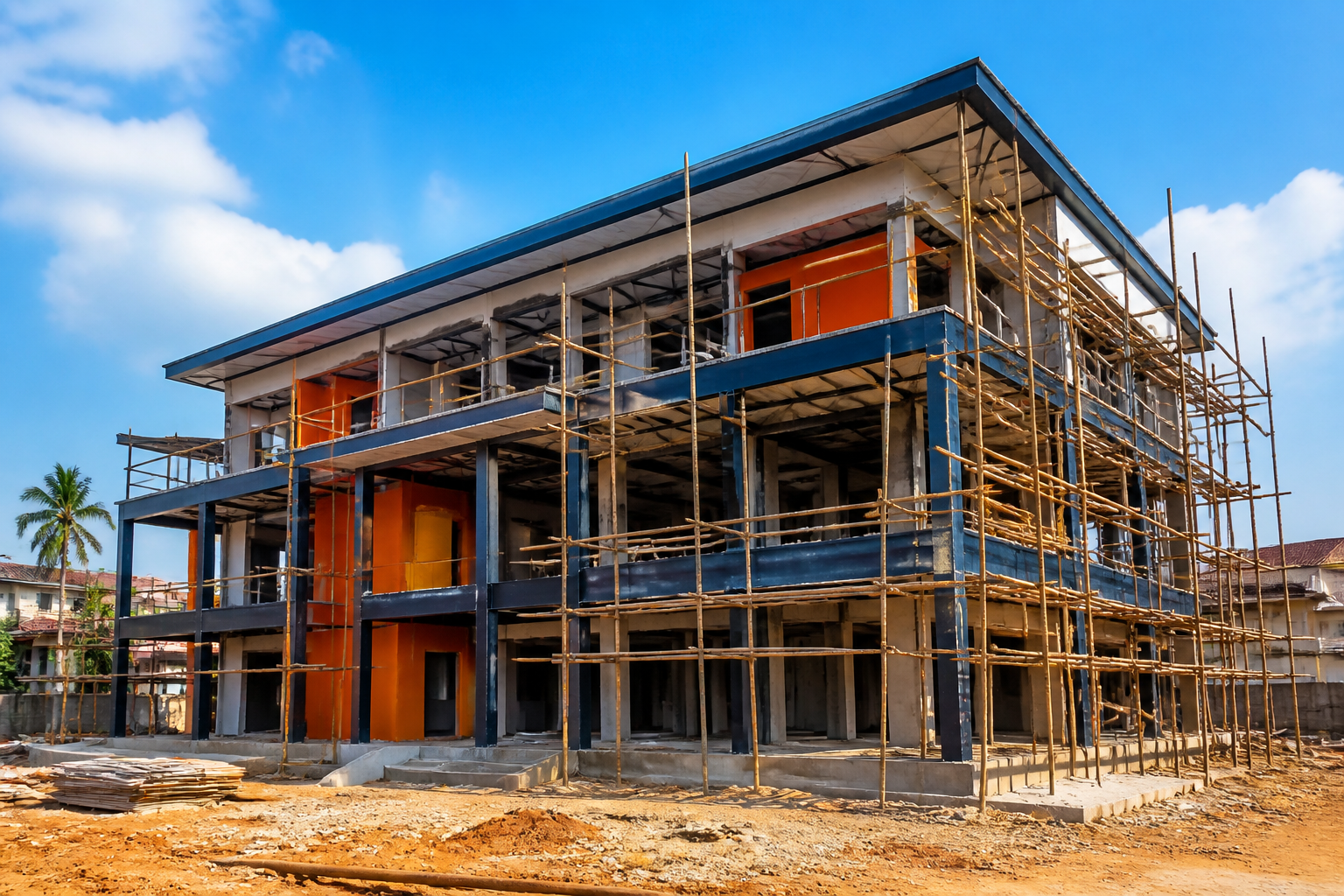
Construction Rainy Season Ghana: Why Timing Your Build Matters More Than You Think
If you're planning a build in Accra, you've probably thought about budget, materials, and contractors. But construction rainy season Ghana planning — actually sequencing your build around the rains — often gets treated as an afterthought. That's a mistake. Rain doesn't affect all stages of construction the same way. Knowing which stages are vulnerable, and which aren't, can be the difference between a solid structure and one you're repairing before you've even moved in.
Ghana Has Two Rainy Seasons. Your Build Has to Respect Both.
Accra sits in a zone with two distinct rainy seasons: the major one running roughly from April through July, and the minor one from September into November. Between them, you get drier windows. But even the "dry" months in Greater Accra can bring unexpected downpours, especially as weather patterns have become less predictable.
A contractor who plans your build without accounting for these windows isn't being negligent by accident. They're either inexperienced with local conditions or they're not thinking beyond their own schedule. Either way, you pay for it.
Earthworks and Foundations: The Stage Where Rain Does the Most Damage
This is where rain causes the most serious, and most lasting, problems.
When you excavate soil for a foundation in Accra, you're often working with laterite, the reddish, iron-rich soil common across southern Ghana. Laterite behaves well when it's properly compacted and kept at a stable moisture level. Introduce heavy rain during excavation or while the foundation is being laid, and several things can go wrong:
Soil saturation changes the load-bearing capacity. Soil that was assessed as suitable before the rains can behave very differently when waterlogged. If compaction is done on saturated soil, it doesn't hold. The ground settles unevenly once it dries, and that unevenness transfers directly into your structure above.
Trenches flood and collapse. Open trenches left exposed during heavy rains don't just fill with water. The walls can collapse inward, contaminating the trench with loose material and requiring re-excavation. That costs time and money.
Concrete curing is compromised. Freshly poured concrete needs controlled conditions to cure properly. Heavy rain on uncured concrete dilutes the surface mix, weakens the finish, and can introduce cracking. Foundations poured in these conditions may look fine immediately but show problems months later.
This is why the earthworks and foundation stage demands either careful timing within a dry window, or proper site protection: covered trenches, drainage channels, and staged pours, if you're building during the rains. A contractor who just pushes through without these measures is cutting corners you won't see until it's too late.
Structural Work: The Middle Stage Has More Flexibility, With Conditions
Once your foundation is cured and your columns and beams are going up, the build becomes more tolerant of rain, but not immune to it.
Blockwork and concrete columns can continue through light rain with proper site management. The bigger concerns here are:
- Reinforcement steel left exposed to rain and humidity will begin to rust. Rust on rebar expands over time inside concrete, causing cracking and spalling years down the line. Steel should be covered when not in active use.
- Mortar joints in blockwork need time to set. Persistent rain before joints cure properly weakens the bond between blocks.
- Access and logistics become harder. Accra's roads, especially in areas like Kasoa, Adenta, or parts of Tema, can become very difficult to navigate with heavy materials during peak rains. Delivery delays cascade into labour delays.
The structural phase isn't a reason to stop building during the rainy season. It's a reason to manage the site properly and keep a close eye on materials.
Finishing Stages: Rain and Humidity Are the Enemy of Quality Work
This is where many Accra homeowners get caught out, and where the damage is most visible.
Plastering, painting, tiling, and screeding all require low ambient moisture to bond and cure correctly. During the rainy season in Accra, humidity levels rise significantly. This creates real problems:
Paint applied in high humidity doesn't bond properly. It may look fine when dry, but it peels within a season. You repaint. You repaint again. The cost adds up fast, and the underlying issue, timing, never gets fixed.
Plaster applied over damp walls traps moisture inside. Over time, that moisture migrates, causes efflorescence (the white salt deposits you see on walls), and can lead to structural dampness that's expensive to remediate.
Floor screeds poured in wet conditions are prone to cracking as moisture escapes unevenly during curing.
The ideal sequence is to get your roof on before the major rains hit, then use the rainy season for internal work where the roof protects you, and schedule external finishes for the drier months. It sounds obvious. But it requires planning your build timeline backwards from the rains, not just forwards from when you want to start.
What Good Rainy Season Planning Actually Looks Like
A contractor who understands construction rainy season Ghana conditions will do a few things before your build begins:
- Assess your specific site: drainage patterns, soil type, flood risk. A plot in a low-lying area of Accra behaves very differently from one on elevated ground in Ashongman or Adjiringanor.
- Map your build stages against the seasonal calendar, identifying which stages must happen in dry windows, which can be managed through the rains with proper site controls, and which should be deliberately scheduled for after the rains.
- Build contingency into the schedule. Not vague buffer time, but specific decisions about what happens if the rains arrive early or run late.
This isn't pessimism. It's how structures that last get built.
Talk to Borbor Before You Set Your Start Date
At Borbor Limited, we assess your site, soil, drainage, location, before we recommend when and how to build. We'll tell you honestly which stages of your project are vulnerable to Accra's rainy seasons, and how to sequence your build to protect your investment.
If you're planning a build in Accra and want a clear, honest assessment of your site and timeline, contact us for a free site visit. No obligation. No upselling. Just a straight conversation about what your project actually needs.