Land Clearing in Ghana: What Site Clearing Actually Involves and Why It Matters
November 3, 2026
Land Clearing in Ghana: What Site Clearing Actually Involves and Why It Matters
When people think about construction, they picture walls going up, concrete being poured, roofing sheets going on. But the work that determines whether a building lasts, or slowly fails, happens before any of that. Land clearing in Ghana is often treated as a quick job to get out of the way. Cut the grass, remove the rubbish, bring in the machines. Done. That thinking is exactly what creates expensive problems later.
Here is what proper site clearing actually involves, and why each part matters.
Vegetation Removal Is Not Just About What You Can See
In Accra and the surrounding areas, plots often carry more than overgrown grass and a few shrubs. You may have deep-rooted trees, old stumps, invasive plants like Chromolaena odorata (locally called Acheampong weed), or years of organic debris layered into the topsoil.
Removing surface vegetation is straightforward. The real work is what comes after. Tree stumps left underground continue to rot. As they decompose, they create voids in the soil. Those voids affect how load is distributed. A slab or footing sitting above a decomposing root system will behave differently over time than one sitting on stable, prepared ground.
The type of vegetation on a site also tells you something about the soil beneath it. Certain plants thrive in waterlogged or poorly draining ground. A good site clearing process reads those signs before the machines arrive.
Why Excavation Depth Planning Happens Before You Dig
Excavation is not a fixed depth that applies to every plot. In Ghana, soil conditions vary significantly, even within the same neighbourhood. Laterite is common across much of the Greater Accra region, but its depth, density, and stability vary. Some plots have a solid laterite layer close to the surface. Others have loose fill, clay pockets, or made ground from previous construction or dumping.
Excavation depth planning means understanding what is actually beneath the surface before deciding how deep to go. This is done through soil investigation: sometimes a full geotechnical report, sometimes targeted trial pits, depending on the scale of the project. The goal is to reach bearing strata that can carry the intended load without settling unevenly.
Skipping this step is how you end up with a structure that cracks within a few years, not because the walls were built badly, but because the foundation is sitting on ground that was never properly assessed.
What drives how much excavation your site needs? The building type and its load, the soil profile, whether the site has been previously built on, and how close you are to areas with high water tables. A site near Weija, Kpeshie Lagoon, or low-lying parts of Tema will behave very differently from a site on elevated ground in Adenta or Ashiaman.
Existing Drainage Patterns: The Most Overlooked Part of Land Clearing in Ghana
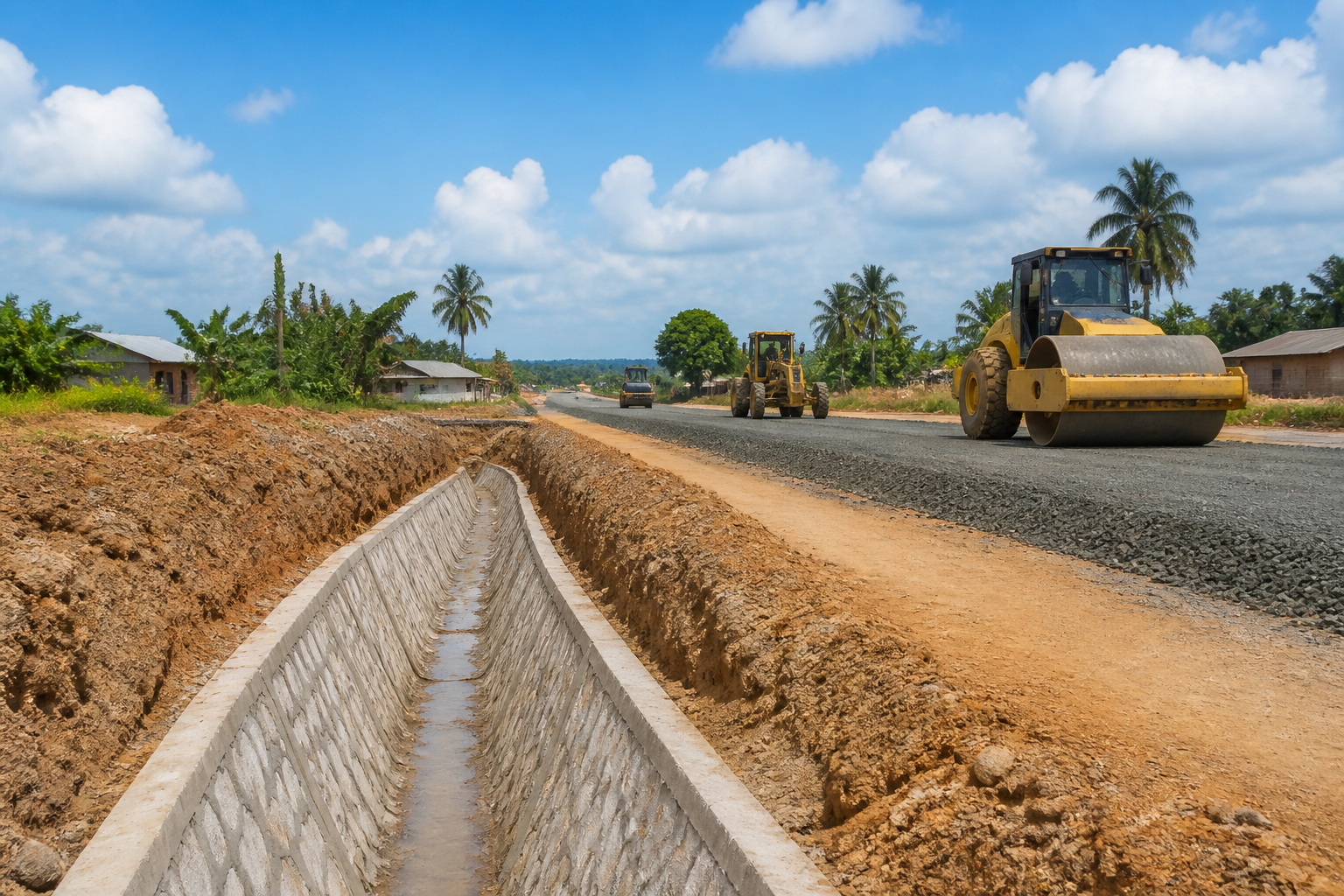
Accra's rainfall is not gentle. The city receives its heaviest rains between April and July, with a second season running from September to November. A cleared site that does not account for how water moves across and beneath it will flood, erode, or push water into neighbouring properties, all of which create legal, structural, and community problems.
Before clearing begins, a competent contractor will observe and map the natural drainage of the site. Where does water currently flow when it rains? Are there natural channels or low points? Is there an existing drain nearby, and is it functioning? Is the site uphill or downhill from adjacent plots?
Clearing vegetation and levelling ground changes how water behaves. If you remove the plants and compacted paths that were slowing and directing runoff, you need to replace that function with designed drainage: cut-off drains, graded surfaces, or retention. If you don't, the first heavy rain will show you exactly where the plan fell short.
This is particularly relevant for larger municipal or private development sites where multiple structures or paved surfaces will reduce the ground's ability to absorb water naturally.
What a Proper Site Clearing Process Looks Like
Done properly, land clearing in Ghana follows a sequence:
- Site assessment. Understanding the vegetation, soil type, drainage, and any buried infrastructure like old pipes or cables before work begins.
- Vegetation and debris removal. Clearing above-ground material systematically, not just pushing it to the edges of the plot.
- Stump and root extraction. Removing underground material that would otherwise decompose and destabilise the ground.
- Topsoil management. Deciding whether topsoil is stripped and stockpiled (useful for landscaping later) or removed, depending on its quality.
- Rough grading. Shaping the cleared surface to direct water away from where the structure will sit, not toward it.
- Soil investigation. Confirming what lies beneath before excavation depths are finalised.
Each step informs the next. Skipping or rushing any one of them creates a gap that the rest of the build cannot fully compensate for.
The Cost of Getting This Stage Wrong
Site clearing is not where most clients want to spend attention or money. It does not look like progress in the way that walls and roofing do. But the factors that drive cost at this stage, including site size, vegetation density, soil conditions, drainage complexity, and distance from disposal points, are also the factors that determine how much remedial work you might face later.
A cracked slab, a flooded ground floor, or a foundation that requires underpinning after construction is complete will cost far more than a thorough site clearing process would have. The right question is not how to spend less on clearing. It is how to understand what your specific site actually needs.
Borbor Limited assesses the soil, drainage, and vegetation of every site before recommending an approach. We explain what we find, what it means for your build, and what needs to happen before the first footing goes in. No guesswork, no upselling. Just an honest read of your land.
Book a free site assessment with Borbor Limited and find out exactly what your plot requires before work begins.