Rubber, Sand, or Organic Infill: Which Astroturf Infill Types Actually Work in Ghana?
September 1, 2026
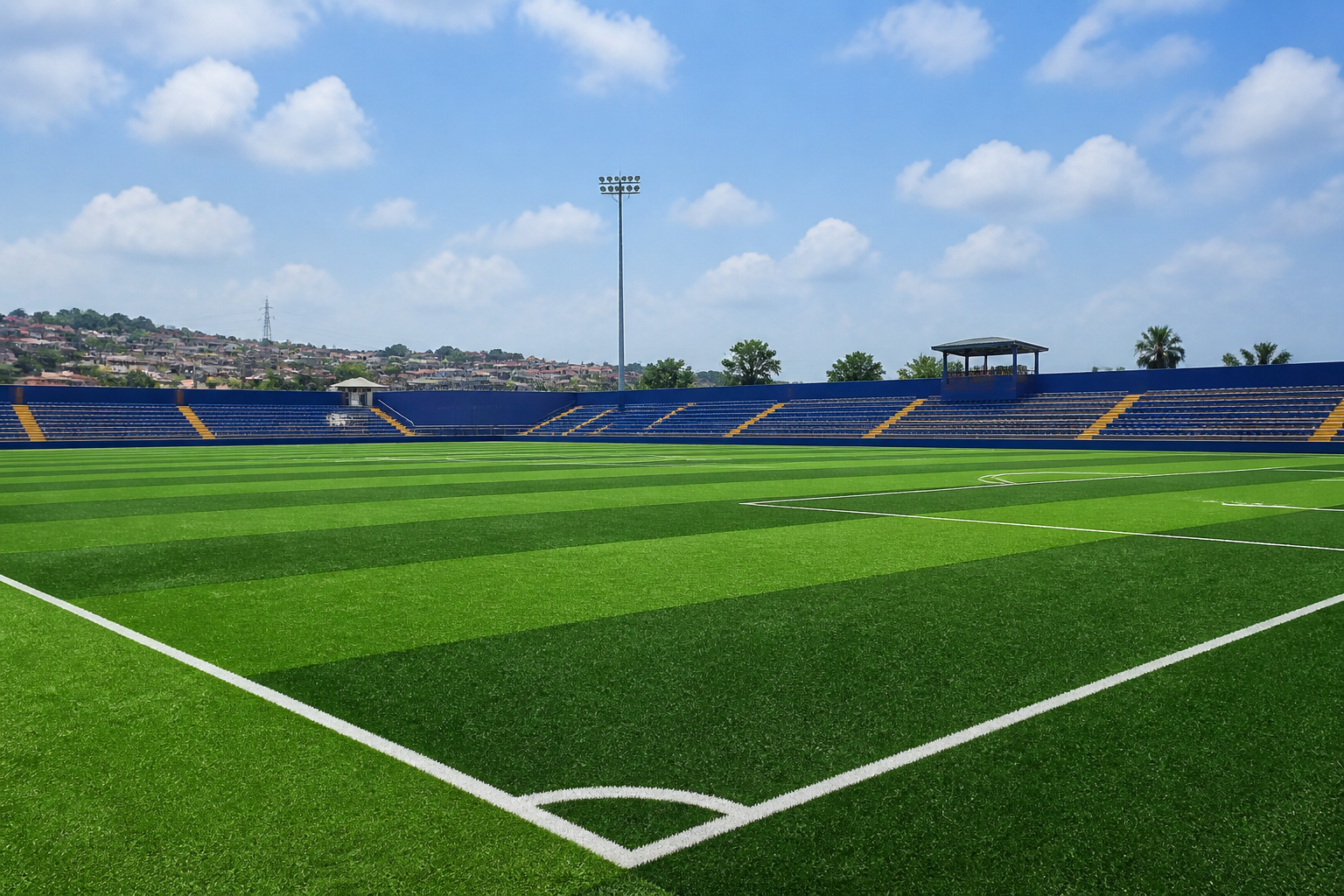
Rubber, Sand, or Organic Infill: Which Astroturf Infill Types Actually Work in Ghana?
If you are planning an artificial turf pitch in Accra or anywhere in Ghana, the infill decision matters more than most people realise. The astroturf infill types available today, including crumb rubber, silica sand, and organic or hybrid alternatives, each behave very differently once you factor in Ghana's heat, the intensity of use a community pitch takes, and what it actually costs to maintain over time. There is no single right answer. There are real trade-offs, and this article walks through each one plainly.
Why Infill Matters More in Ghana Than in Cooler Climates
Infill is the material packed between the artificial grass fibres. It holds the blades upright, cushions impact, and affects how the surface plays. In a temperate climate, infill is important. In Ghana, it is critical.
Accra sits close to the equator. From November through April, harmattan conditions reduce humidity but push daytime temperatures high. From March through July, the sun is intense even on overcast days. A surface that performs well in Germany or the UK can become genuinely dangerous here if the infill absorbs and holds heat.
This is not a minor concern. Surface temperatures on poorly chosen artificial pitches in West Africa can reach levels that cause discomfort or skin burns on contact. The infill type is the biggest single factor in how hot a surface gets.
Crumb Rubber: The Common Choice and Its Real Limitations
Crumb rubber, usually recycled from old vehicle tyres, is the most widely installed infill globally. It is durable, it cushions well, and it is broadly available. Many pitches across Accra use it.
The problem in Ghana is heat retention. Rubber absorbs solar radiation and holds it. On a full sun afternoon in Accra, a rubber-infilled pitch can become significantly hotter than the surrounding air temperature. Players feel this through their boots and, if they fall, on their skin.
Rubber also has a migration issue. Over time, granules travel onto surrounding concrete, into drainage channels, and off-site. In a community setting where children play barefoot nearby, this matters.
On the positive side, rubber provides good ball rebound and a playing feel that many players prefer. It compacts less than sand over time, meaning the surface stays more consistent through heavy use. For a pitch that will be used intensively, with multiple sessions daily, rubber's durability is a genuine advantage. The heat trade-off, though, has to be managed with shade structures, watering schedules, or restricted midday use.
Silica Sand: Cooler, But Not Without Its Own Problems
Silica sand runs cooler than rubber under direct sun. That is its primary advantage in Ghana's climate, and it is a real one. Sand does not absorb and hold heat the way rubber does, which means afternoon surface temperatures stay more manageable.
The trade-off is performance and maintenance. Sand is heavier and compacts over time. On a busy pitch, the fibres can mat down as the sand settles, which affects ball roll and player comfort. Sand also needs more regular redistribution. Without periodic brushing and levelling, you get uneven patches that change how the pitch plays and increase injury risk.
Sand infill also affects drainage differently. Ghana's rainy seasons, the major rains from April to July and the minor rains from September to November, can be intense. A well-designed sand-infilled pitch drains effectively, but the base construction underneath has to be right. Sand alone will not compensate for a poorly graded sub-base.
For lower-traffic pitches, or for facilities that can commit to regular maintenance, sand is a serious option. For high-volume community pitches with minimal maintenance resource, the compaction issue becomes a real problem within a few years.
Organic and Hybrid Infill: The Newer Options Worth Knowing About
Organic infills, made from materials like cork, coconut fibres, or treated wood, have grown in use as alternatives to rubber. Hybrid systems combine sand with a small proportion of organic material.
The appeal in a Ghanaian context is twofold. First, organic infills run cooler than rubber, closer to sand in their heat profile. Second, they avoid the migration and environmental concerns associated with crumb rubber.
The limitation is availability and long-term performance in high humidity. Some organic infills absorb moisture and can break down faster in Ghana's wet seasons if not sourced and specified correctly. Not all products marketed as organic perform equally: the quality and treatment of the material matters significantly.
Hybrid systems, which pair sand with a small organic component, can offer a middle ground. They provide better heat performance than pure rubber, better durability than pure sand, and a playing feel that sits between the two. They are worth asking about, but the right specification depends on your pitch's specific use pattern and location.
The Factors That Should Drive Your Decision
Rather than picking a winner, ask these questions about your specific project:
- How many hours per day will the pitch be in use? High traffic favours rubber's durability. Lower traffic opens up sand or organic options.
- What is the maintenance capacity? Sand needs more regular attention. If maintenance is infrequent, that has to factor in.
- Is there shade or irrigation available? If the pitch will be watered before afternoon sessions or has shade on the west side, rubber's heat problem is reduced.
- What is the surrounding environment? A pitch next to a school where children play barefoot nearby has different rubber migration considerations than a fenced facility.
- What is the sub-base design? Infill choice interacts with drainage design. The two decisions should be made together.
The actual cost difference between infill types depends on volume, sourcing, and what is available in Ghana at the time of your build. Any contractor who gives you a fixed comparison without assessing your site is guessing.
Talk to Someone Who Knows Ghana's Conditions
At Borbor Limited, we assess the soil, the drainage, the sun exposure, and the use pattern before we recommend anything. We will tell you which astroturf infill types make sense for your specific pitch, and which ones do not, even if they are cheaper on paper.
If you are planning a pitch in Accra or the surrounding region, contact us for a free site assessment. We will give you a straight answer, not a sales pitch.