
Why Roads in Ghana Crack Within Two Years: What Proper Road Construction in Ghana Actually Prevents
August 28, 2026
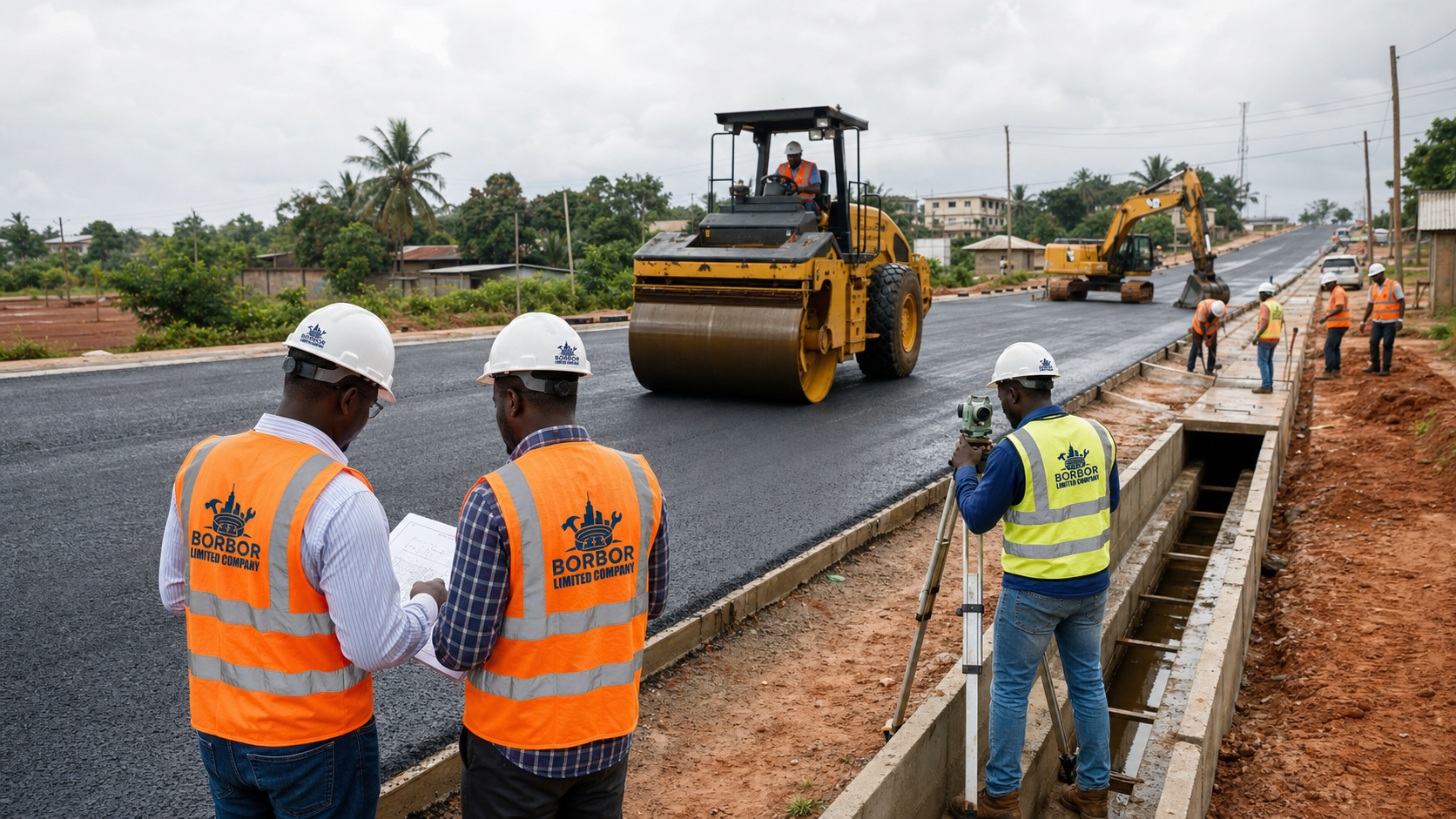
Why Roads in Ghana Crack Within Two Years: What Proper Road Construction in Ghana Actually Prevents
You've seen it. A newly paved road in Accra, smooth and clean in January, riddled with potholes and cracks by the following rainy season. People blame the asphalt. They blame the contractor who disappeared. Sometimes they blame the government. But in most cases, the asphalt itself is not the problem. The problem started before a single layer of tarmac was ever laid. Understanding this is the difference between road construction in Ghana that lasts and road construction that fails on a predictable schedule.
The Real Culprit: What's Underneath the Surface
Every road sits on layers. The visible asphalt or concrete surface is just the top layer. Beneath it is a base course, then a sub-base, and beneath that, the natural ground, called the subgrade. When engineers talk about road failure, they almost always trace it back to the sub-base or the subgrade. Not the top.
Here is why this matters in Ghana specifically. Accra and its surrounding areas sit on a variety of soil types: laterite in some zones, sandy or clay-heavy soil in others, and areas near Sakumono or the Weija corridor where the ground holds moisture differently after rain. These soils behave differently under load. Clay-heavy soils expand when wet and contract when dry. Sandy soils shift under repeated traffic. If you lay a road on top of unstabilized soil, soil that has not been tested, treated, and compacted properly, the road above it will move with that soil. And movement means cracks.
This is not a theory. It is basic geotechnical engineering. The surface fails because the foundation was never stable.
What Proper Sub-Base Testing and Stabilization Actually Involves
Legitimate road construction in Ghana, the kind that holds up through multiple rainy seasons and heavy traffic, begins with soil investigation, not excavation. Before any material is brought to site, the ground needs to be understood.
This typically involves:
Soil classification tests. Samples are taken from the site and tested to identify the soil type, its plasticity, and how it behaves under moisture and load. A road built on a site near Tema's industrial corridor faces different conditions than one in a residential area in Adenta. The soil profile at each location is different and demands a different response.
California Bearing Ratio (CBR) testing. This test measures how much load a soil can bear before it deforms. It directly informs how thick the sub-base needs to be and what material should be used. Skipping this step means guessing, and guessing with someone else's road.
Compaction and stabilization. Once the subgrade is understood, it is either compacted to a specified density or stabilized using materials like cement, lime, or laterite blends, depending on what the soil needs. This is not a one-size-fits-all process. The treatment depends on the test results.
Layer-by-layer compaction verification. Each layer, subgrade, sub-base, base course, should be compacted and tested before the next layer goes down. This is where shortcuts get taken on poorly managed sites. Layers get added too quickly, compaction is inadequate, and the problem is buried under the next layer until the rains arrive.
The material choice for the sub-base also matters. Crushed stone and well-graded laterite are commonly used in Ghana, but their quality varies by source. Material that looks suitable on the surface can be too fine, too plastic, or too weak for the traffic load it will carry. Testing the material before it goes into the ground is not optional. It is the job.
Why Traffic Load Is Equally Ignored
Another factor that gets underestimated in road construction in Ghana is traffic load analysis. A road designed for light residential traffic will fail quickly if it ends up carrying commercial trucks, tipper lorries, or heavy goods vehicles. This happens often in peri-urban areas around Accra where land use changes after a road is built: a residential street becomes a route for construction vehicles as the area develops.
Proper road design accounts for both current and projected traffic. The sub-base thickness, base course material, and surface layer are all calibrated to the expected load. When that calibration is skipped, the road is essentially underbuilt for the reality it will face.
The Cost Calculation Nobody Does Upfront
The reason sub-base work gets cut is usually cost, or the perception of cost. A contractor who skips soil testing and compaction verification can submit a lower quote. That quote looks attractive. But the true cost of a road that fails in two years is not just the resurfacing bill. It is the disruption, the vehicle damage, the time, and often the full reconstruction that follows because a failed sub-base cannot simply be patched from above.
What drives the actual cost of doing it right? The site's soil type, the depth of treatment required, the traffic load the road needs to carry, the length and width of the road, and the availability of quality sub-base material nearby. These factors are specific to your site. No honest contractor can give you a meaningful figure without assessing them first.
What to Ask Any Road Contractor in Ghana
Before you accept any quote for road construction or rehabilitation, ask these questions:
- Have you done a soil investigation on this site?
- What CBR value did the subgrade test return, and what sub-base thickness does that require?
- How will you verify compaction at each layer before proceeding?
- What traffic load is this road designed to carry?
If the contractor cannot answer these questions specifically, the road they build will answer them for you, within two rainy seasons.
At Borbor Limited, we assess the ground before we plan the road. We test the soil, match the design to the actual conditions, and explain every decision in plain terms before work begins. If you have a road project in Accra, whether it is a new construction or a failing road you want done properly this time, contact us for a free site assessment. We will tell you exactly what the ground requires and what it will take to build something that lasts.